Cognitive Partnership

Nazarbayev University · 2026

Cognitive Partnership

Teaching students to think with AI, and without it.

Students already work with AI. The open question is what kind of work leaves them knowing more once the AI is gone. Cognitive partnership is my answer. I teach it in four courses and test it in a preregistered study.

01 The idea

What is cognitive partnership?

Cognitive partnership is sustained intellectual work with AI as a genuine partner in a shared system of thinking.

Thinking does not stay inside one head. It spreads across people, tools and settings. When a student and an AI work well together, the thinking happens in the exchange between them.

Two things matter afterward. One is what the student can do with the AI. The other is what stays with the student when the AI is gone. That second thing is cognitive residue, and it is the outcome I care about most as a teacher.

Handing AI the parts that do not matter is fine, even smart. Handing it the understanding itself is over-reliance. The only way to tell the two apart is to take the AI away and see what the student can still do.

Four principles

  1. Stay open about what AI is

    Ontological openness

    What AI is remains an open question, and students argue about it instead of settling it early. A student who sees AI as just a tool gives it little effort. This principle makes the other three possible.

  2. Think further, not faster

    Purpose

    The goal is thinking that goes further than it would alone, not saved time. Students may hand over routine parts and keep the main argument in their own heads.

  3. Follow your curiosity

    Engagement

    Curiosity and imagination turn an odd answer into a new direction. Without them, the work shrinks to ask, receive, submit.

  4. Work in rounds

    Iteration

    One exchange with AI is retrieval. Partnership happens in the back-and-forth, where students push back, redirect and build, and the work stays theirs.

02 Courses

Where I teach it

I teach cognitive partnership in four courses at Nazarbayev University, from undergraduates to graduate students.

Advanced Research Methods

Master's students · Spring 2026, again in Spring 2027

The Convergence exam

Claude and I built a personalized final exam for each of 15 students. Each student did fieldwork in the year 2100 with non-human participants: sperm whales, beavers, forest fungal networks or an alien species. Each story turned on the methods problem that student expected to find hardest in their own thesis, and each student's choices reappeared in two classmates' exams.
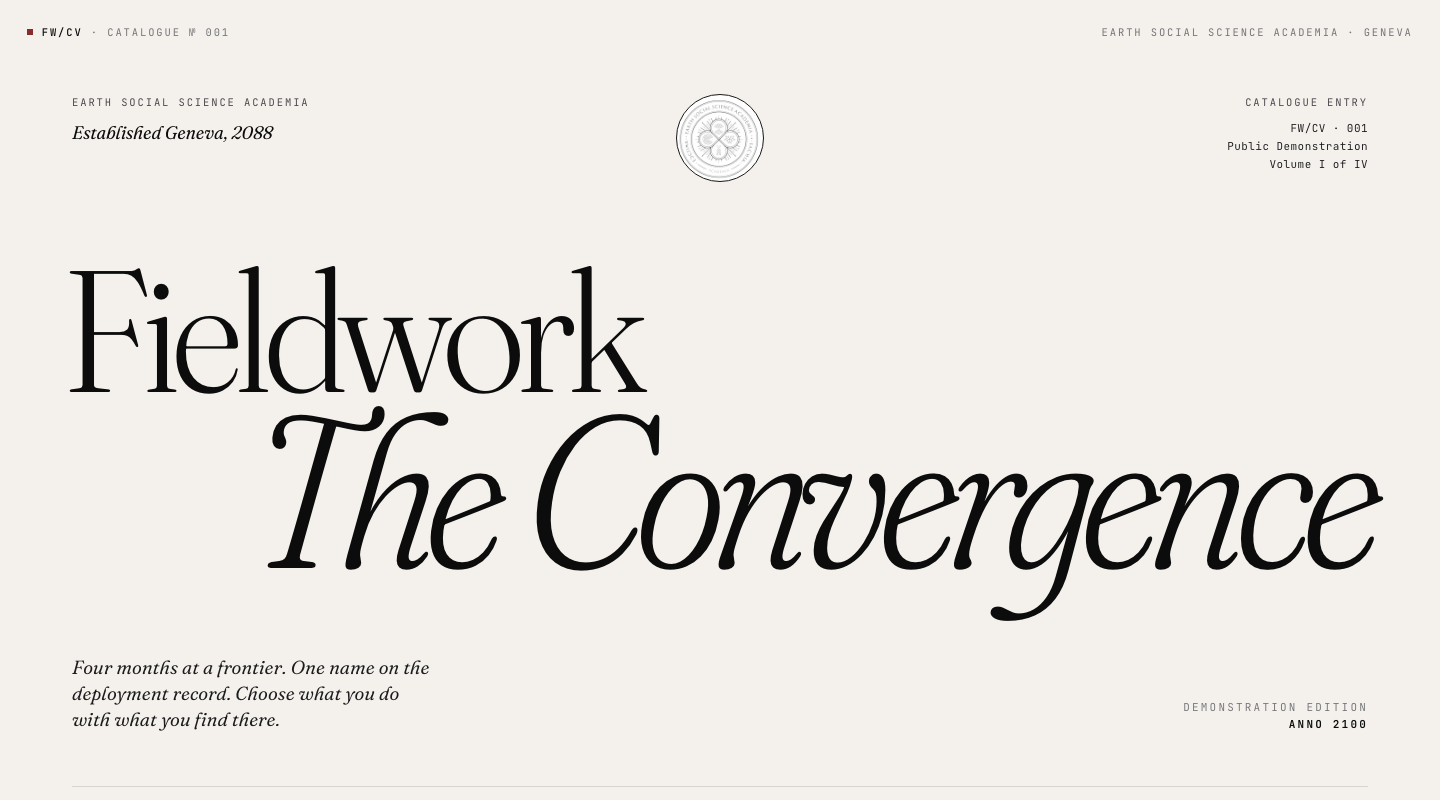
The opening page of the Convergence exam demo

Code under MIT, content under CC BY 4.0. Free to adapt.
Research Methods

Undergraduates · Fall 2026

Students talk with AI about their research project every week and write a short summary of each conversation: where they pushed back and what changed. They build their research designs with AI and must explain every choice in their own words. They present their projects as web pages.

AI from a Social Science Perspective

Upper-level undergraduates and MA students · Fall 2026

The course opens with three weeks on what AI is. Students write two op-eds about AI, and some publish them in The Observatory, the course's outlet. Over the semester they build a public project with AI, then answer questions about it without AI in the room.

Qualitative Research Methods

Graduate students · Fall 2026

Students build three portfolios, in process tracing, grounded theory and reflexive thematic analysis. For each case they first analyze the material in class without AI, then analyze it again with AI, and compare the two readings. They also write an op-ed.

03 In practice

How each principle shows up in class

Every course opens in Week 1 with the same field guide to working with AI. Two rules hold for all AI work. Students must be able to explain every part of it, and they show how they made it in a process log.

Research Methods AI from a Social Science Perspective Qualitative Research Methods
Stay open about what AI is Shown in class, not graded Three weeks on what AI is, and an op-ed arguing a position Debates on reflexivity, and an op-ed
Think further, not faster Research designs built with AI and explained in the student's own words A semester project built with AI and defended without it Each case analyzed without AI first, then with AI
Follow your curiosity A research presentation built as a web page A public project site, graded partly on design A step in every portfolio where students question the AI
Work in rounds Eight weekly summaries of the rounds with AI Process logs for both op-eds and the project A process log for each portfolio, graded on the rounds
Without AI Short tasks in class without AI Checkpoints in class without AI Analysis in class without AI

In all three courses, students take a paper test without AI in Week 1 and Week 14.

04 The study

The study

What kind of work with AI leaves students knowing more without AI?

In Fall 2026 Denis de Crombrugghe and I follow students in three of these courses through one semester. We measure the same things in Week 1 and again in Week 14, and compare each student with their own starting point.

What we measure

How students work with AI

A survey of twelve questions on purpose, curiosity, rounds and openness about what AI is.

What they know without AI

A paper test in class, with no AI in the room. Sixteen questions each time, eight of them the same in both weeks. This is the outcome that matters most.

How much they depend on AI

Five questions on whether a student's own thinking has come to rely on AI.

How well they understand AI

A scale of 25 questions on AI literacy.

Our bet

Students who work with AI more as partners will end the semester knowing more without AI, depending on it less and understanding it better. We fixed these three predictions before the semester began.

How we keep it honest

Registered in advance

We registered the questions, the measures and the full analysis plan on OSF before the first class.

Held by someone else

Denis holds all consent forms and survey answers until grades are final, so I never know who takes part while I teach.

Scored twice

Two raters score each open answer separately, against rubrics written before anyone read an answer.

Timeline

  1. August 2026Week 1 measures · done
  2. November 2026Week 14 measures
  3. December 2026Denis releases the anonymized data of students who consented
  4. January 2027Scoring and analysis
  5. 2027Results

Approved by the Institutional Research Ethics Committee of Nazarbayev University. Taking part is voluntary and has no effect on grades.

05 People

Who we are

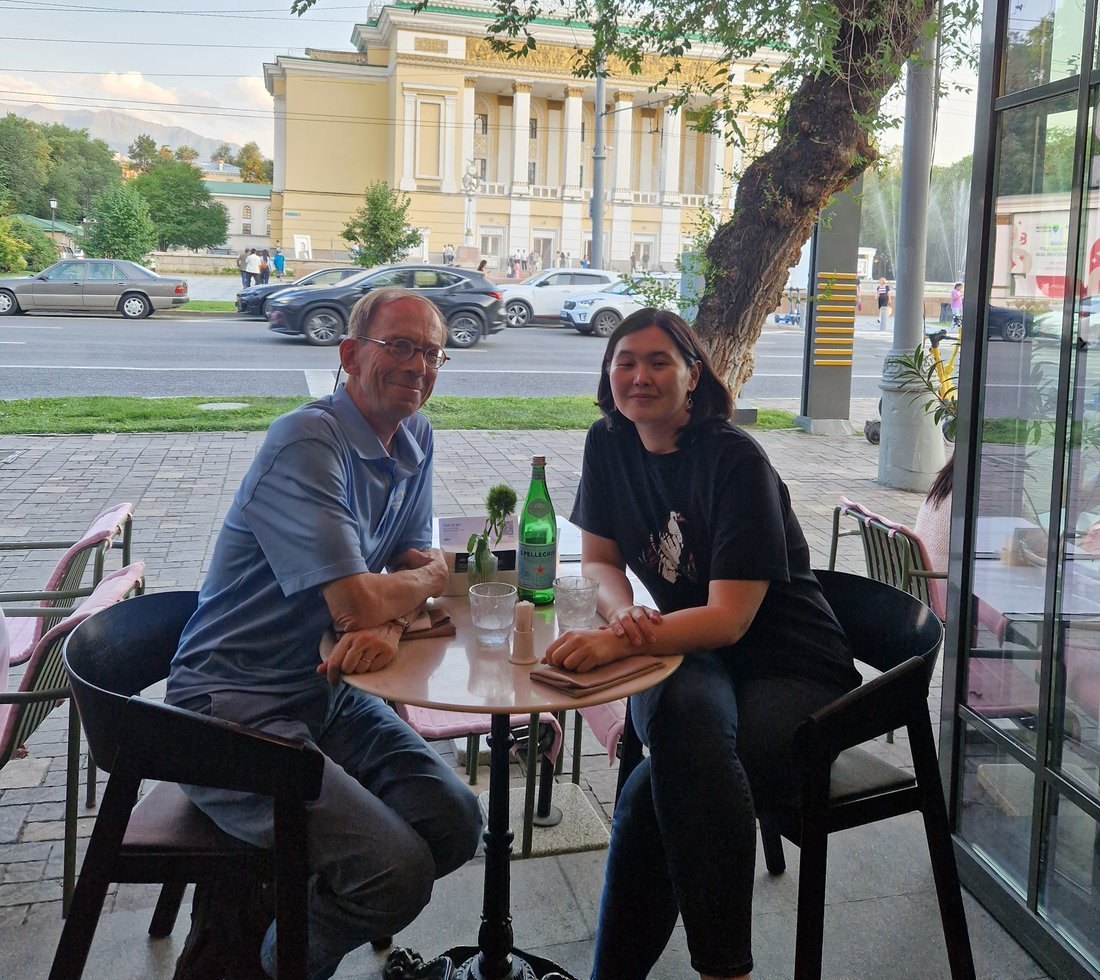
Dina Pisareva and Denis de Crombrugghe

Dina Pisareva

Assistant Professor of Political Science, Nazarbayev University · Principal investigator

Dina is an interdisciplinary social scientist. She studies how people make sense of power, gender and sexuality, and how crisis shelters for women work in Qazaqstan. She has worked with Claude on research and teaching since December 2025, and in 2026 she rebuilt her courses around cognitive partnership. She also leads Choosing a Life, a study of women's life histories across Qazaqstan.

Denis de Crombrugghe

Coventry University Kazakhstan · Co-investigator

Denis built COMET III, a statistical model of Europe's economies used by the European Commission, then taught statistics and econometrics at Maastricht University until his retirement. He holds degrees from Leuven, Chicago and Maastricht. Other scholars have cited his research on state capacity and foreign investment more than a thousand times. For this study he reviewed the design, built the statistical side and holds the data during the semester.